Umožňují základní funkce webových stránek, jako je přihlášení uživatele a správa účtu. Webové stránky nelze bez nezbytně nutných souborů cookies správně používat.


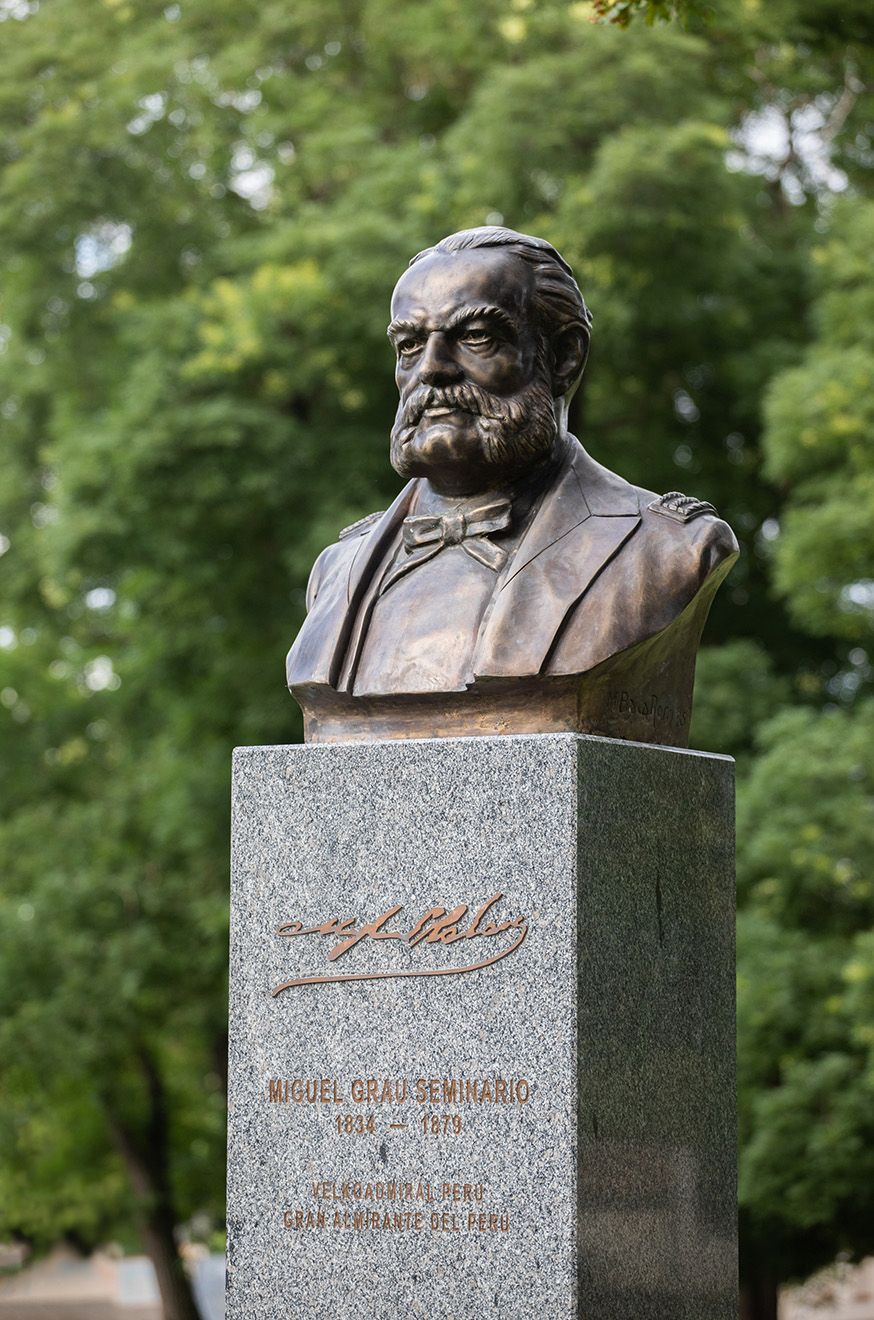
Miguel Grau
Nejznámější peruánský námořní důstojník. Byl znám jako el Caballero de los Mares což znamená Džentlmen moří, pro svoje zacházení s poraženými nepřáteli. Účastnil se občanské války v Peru probíhající v letech 1856–1858, První tichomořské války a Druhé tichomořské války.
27. 7. 1834 – 8. 10. 1879
Miguel Grau (celým jménem Miguel María Grau Seminario)
Nejznámější peruánský námořní důstojník. Byl znám jako el Caballero de los Mares, což znamená Džentlmen moří, pro svoje zacházení s poraženými nepřáteli. Účastnil se občanské války v Peru probíhající v letech 1856–1858, První tichomořské války a Druhé tichomořské války.
Poté, co se naučil námořnickým dovednostem na obchodních lodích, vstoupil Miguel Grau ve věku 19 let do peruánského námořnictva jako námořní důstojnický kadet.
Jen o několik let později opustil peruánské námořnictvo z politických důvodů. V roce 1863 byl však povolán zpět do služby a od té doby jeho kariéra postupovala rychle a brilantně.
V roce 1864, ve věku pouhých 30 let, byl vyslán jako člen malé skupiny do Evropy, aby nakoupil lodě v reakci na rostoucí hrozbu, kterou pro Peru (a další jihoamerické země) představovalo Španělsko. Zatímco jeho kolegové navštívili Birkenhead, aby zadali objednávku na loď Huáscar, Miguel Grau navštívil přístav Nantes ve Francii, kde on a velitel Pardo de Zela úspěšně vyjednali nákup dvou lodí, které byly postaveny pro Konfederaci Spojených států, ale nyní byly určeny pro peruánskou flotilu.
O několik let později – v únoru 1868 – byl Miguel Grau pověřen na osm let velením lodi Huáscar. Na počátku války v roce 1879 se poté k velení lodi Huáscar vrátil.
Pacifická válka
Pacifická válka začala 5. dubna 1879 a v ní se proti Chile postavily síly Peru a Bolívie. Jako kapitán lodi Huáscar sehrál Miguel Grau klíčovou roli díky svým legendárním námořním schopnostem – tajnému pohybu, překvapivým útokům a následnému zmizení –, když narušoval a přerušoval chilské komunikační a zásobovací linie, bombardoval pobřežní zařízení a poškodil, zajal nebo zničil několik nepřátelských plavidel. Grau a jeho posádka rovněž zachránili trosečníky a vyhnuli se zbytečným škodám na straně nepřítele. To je důvod, proč je peruánskou vládou a peruánským Červeným křížem uznáván jako „předchůdce humanitárního mezinárodního práva platného pro ozbrojené konflikty na moři“.
Tyto činy dokázaly odložit chilskou invazi po moři o šest měsíců. V důsledku toho byl vládou v Limě povýšen na kontradmirála.
Smrt v bitvě u Angamos
8. října 1879 byl Miguel Grau zabit protipancéřovým granátem vystřeleným chilskou válečnou lodí Almirante Cochrane během blízkého dělostřeleckého souboje. Ačkoli většina ostatků Miguela Graua nebyla nalezena, byly přesto pohřbeny s vojenskými poctami jak v Chile, tak v Peru.
V roce 1967 mu byla na základě rozhodnutí peruánské vlády posmrtně udělena hodnost Gran Almirante del Perú (velkoadmirál Peru).
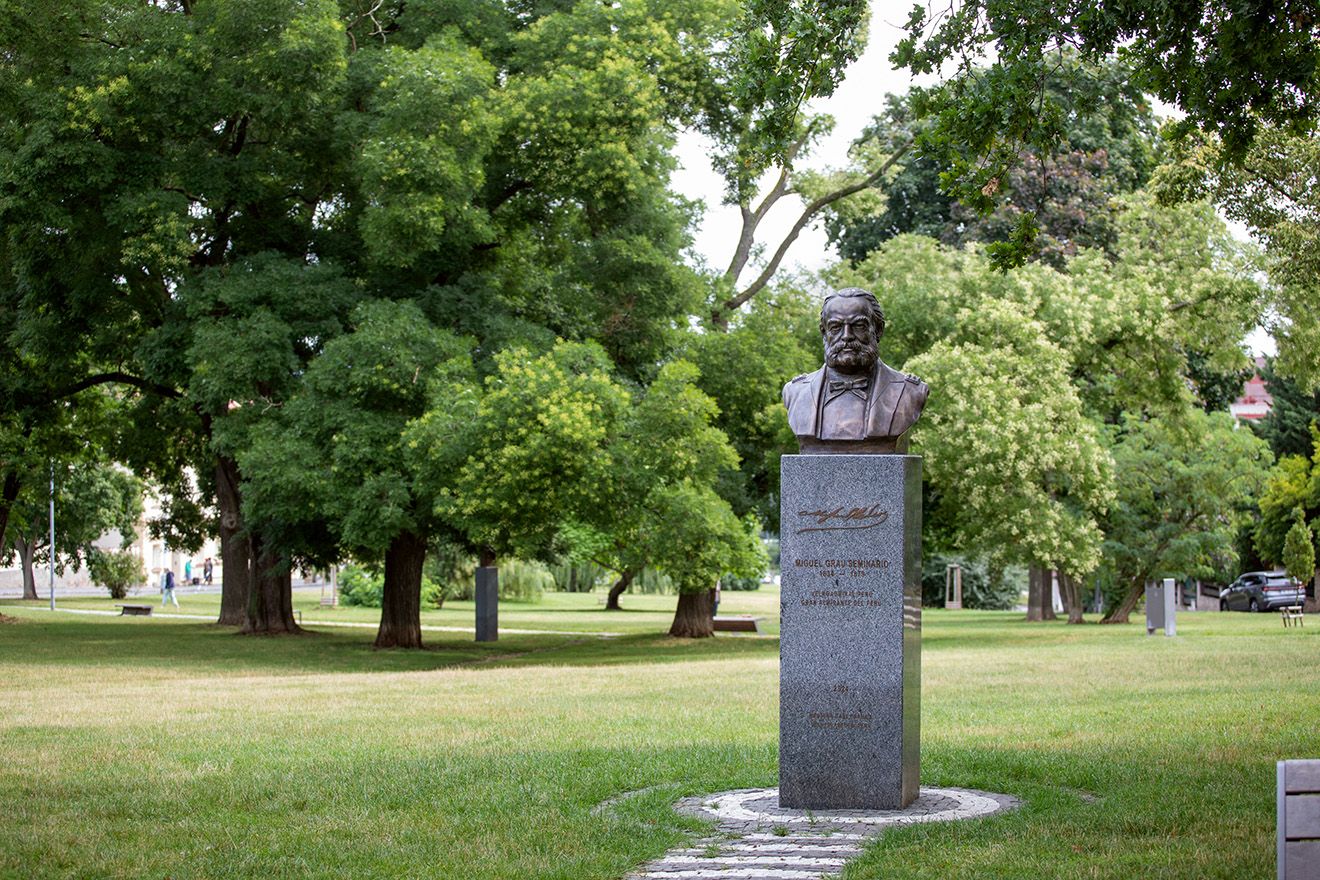
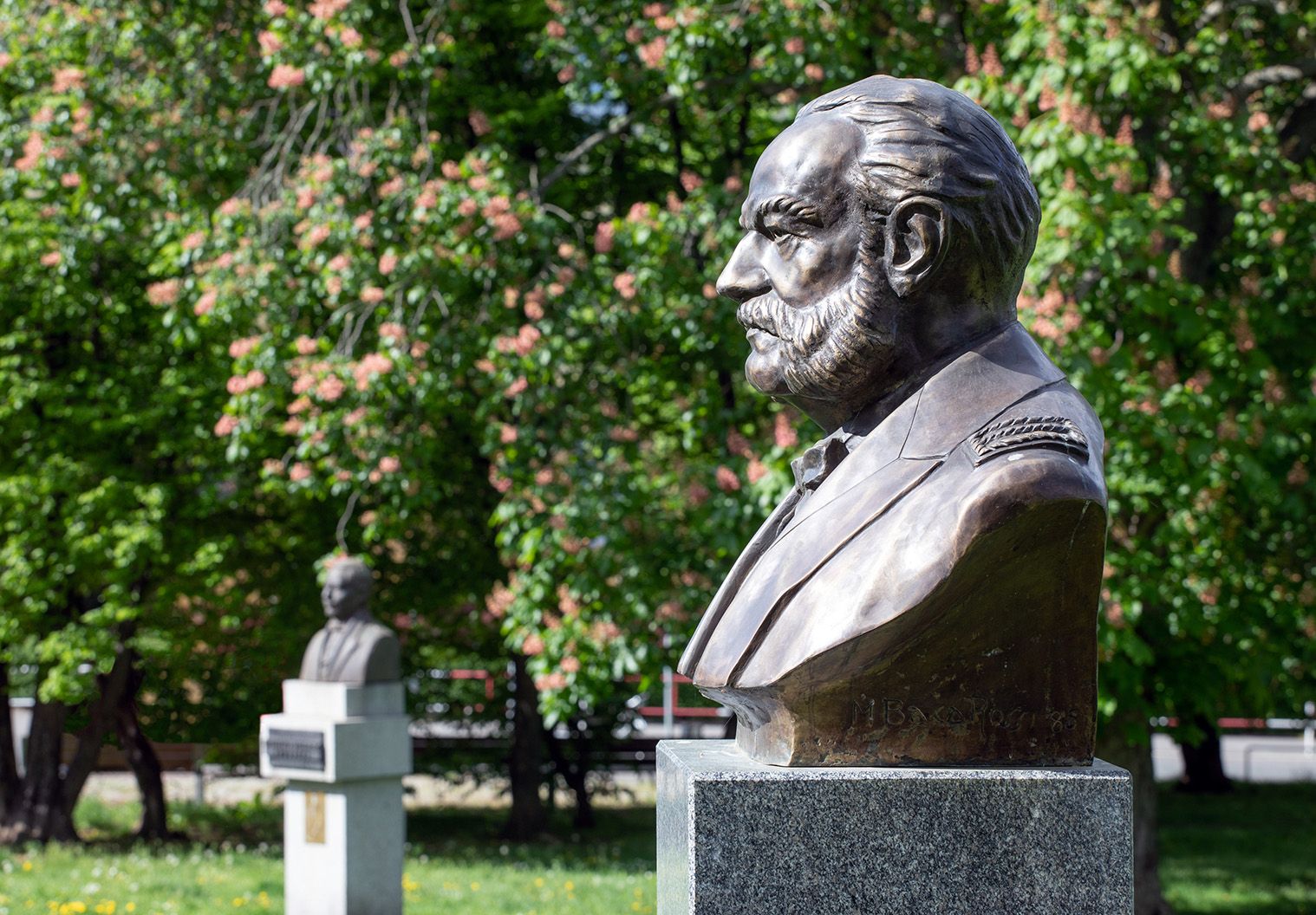
Miguel Grau zůstává ikonickou postavou pro peruánské občany, kteří ho v roce 2000 v lidovém hlasování uznali jako „Peruánce tisíciletí“. Také více než 25 bronzových soch vystavených na čtyřech z pěti kontinentů světa dokazuje úctu a obdiv k tomuto „Peruánskému námořnímu důstojníkovi všech dob“.
Díky svému laskavému a rytířskému zacházení s poraženými nepřáteli je dodnes přezdíván jako „El Caballero de los Mares“ – španělsky „Gentleman moří“.
Miguel Grau (full name Miguel María Grau Seminario)
July 27, 1834 – October 8, 1879
The most famous Peruvian naval officer. He was known as el Caballero de los Mares, meaning Gentleman of the Seas, for his treatment of defeated enemies. He participated in the Peruvian Civil War of 1856–1858, the First Pacific War, and the Second Pacific War.
After learning seamanship skills on commercial vessels, Miguel Grau joined the Peruvian Navy as an officer candidate ‘midshipman’ at the age of 19.
Just a few years later, he left the Peruvian Navy due political issues. Nevertheless, he was called to re-join the Service in 1863; since then, his career progress was rapid and brilliant.
In 1864 - aged just 30 - he was sent as part of a small group to Europe to buy ships in response to the growing threat to Peru (and other South American countries) from Spain. While his colleagues visited Birkenhead to commission Huáscar, Miguel Grau visited the Port of Nantes in France, where he and Commander Pardo de Zela successfully negotiated the purchase of two ships that had been built for the U.S. Confederate States but were now destined for the Peruvian fleet.
A few years later – in February 1868 - Miguel Grau was given the command of Huáscar for eight years until. He returns to command the Huáscar at the start of the war of 1879.
War of the Pacific
The War of the Pacific began on 5 April 1879 and saw the forces of Peru and Bolivia take on Chile. As captain of the Huáscar, Miguel Grau’s legendary display of naval skill - moving stealthily, striking by surprise, and then disappearing - played a key role by harrying and breaking Chilean lines of communication and supply, bombarding coastal installations, and damaging, capturing, or destroying several enemy vessels. Likewise, Grau and his crew saved shipwrecked and avoid making unnecessary damage to the enemy. That’s the reason why he is recognized by the Peruvian Government and the Peruvian Red Cross as “The precursor to humanitarian international law applicable to armed conflicts at sea”.
These actions put off a Chilean invasion by sea for six months. As a result, he was promoted to rear admiral by the government in Lima.
Death at Battle of Angamos
On 8 October 1879 Miguel Grau was killed by an armour-piercing shell fired by the Chilean warship Almirante Cochrane during a close-range artillery duel. Although most of Miguel Grau's body was not recovered, his remains were buried with military honours both in Chile and Peru.
He posthumously received the rank of Gran Almirante del Perú (Grand Admiral of Peru) in 1967 by order of the Peruvian Government.
Miguel Grau remains an iconic figure for the people of Peru who, in the year 2000, recognised him as the ‘Peruvian of the Millennium’ in a popular vote. Also, more than 25 bronze-sculptures displayed in four of the five continents confirm the respect and admiration for this Peruvian Navy Officer for all Seasons.
He remains known as ‘El Caballero de los Mares’ - Spanish for ‘Gentleman of the Seas‘ - for his kind and chivalrous treatment of defeated enemies.
Miguel Grau (nombre completo Miguel María Grau Seminario)
27 de julio de 1834 – 8 de octubre de 1879
El oficial naval peruano más famoso. Era conocido como «el Caballero de los Mares» por su trato hacia los enemigos derrotados. Participó en la guerra civil peruana de 1856-1858, en la Primera Guerra del Pacífico y en la Segunda Guerra del Pacífico.
Tras aprender marinería en buques mercantes, Miguel Grau se incorporó a la Marina de Guerra del Perú como oficial candidato a guardiamarina a los 19 años. Pocos años después, dejó la Marina de Guerra del Perú por problemas políticos. Sin embargo, fue llamado a reincorporarse al Servicio en 1863; desde entonces, su carrera profesional fue rápida y brillante.
En 1864, con tan solo 30 años, formó parte de un pequeño grupo enviado a Europa para comprar barcos en respuesta a la creciente amenaza española contra Perú (y otros países sudamericanos). Mientras sus colegas visitaban Birkenhead para comisionar el Huáscar, Miguel Grau visitó el puerto de Nantes en Francia, donde él y el comandante Pardo de Zela negociaron con éxito la compra de dos barcos que habían sido construidos para los Estados Confederados de EE. UU., pero que ahora estaban destinados a la flota peruana.
Unos años más tarde, en febrero de 1868, Miguel Grau recibió el mando del Huáscar durante ocho años. Regresó al mando del Huáscar al comienzo de la guerra de 1879.
Guerra del Pacífico
La Guerra del Pacífico comenzó el 5 de abril de 1879 y vio a las fuerzas de Perú y Bolivia enfrentarse a Chile. Como capitán del Huáscar, la legendaria demostración de destreza naval de Miguel Grau —moviéndose sigilosamente, atacando por sorpresa y luego desapareciendo— jugó un papel clave al hostigar y romper las líneas de comunicación y abastecimiento chilenas, bombardear instalaciones costeras y dañar, capturar o destruir varias embarcaciones enemigas. Asimismo, Grau y su tripulación evitaron naufragar y causar daños innecesarios al enemigo. Por ello, es reconocido por el Gobierno peruano y la Cruz Roja Peruana como «el precursor del derecho internacional humanitario aplicable a los conflictos armados en el mar».
Estas acciones pospusieron una invasión chilena por mar durante seis meses. Como resultado, fue ascendido a contralmirante por el gobierno de Lima.
Muerte en la Batalla de Angamos
El 8 de octubre de 1879, Miguel Grau murió a causa de un proyectil perforante disparado por el buque de guerra chileno Almirante Cochrane durante un duelo de artillería a corta distancia. Aunque no se recuperó la mayor parte del cuerpo de Miguel Grau, sus restos fueron enterrados con honores militares tanto en Chile como en Perú.
Recibió póstumamente el grado de Gran Almirante del Perú en 1967 por orden del Gobierno peruano.
Miguel Grau sigue siendo una figura icónica para el pueblo peruano, que en el año 2000 lo reconoció como el "Peruano del Milenio" en votación popular. Además, más de 25 esculturas de bronce expuestas en cuatro de los cinco continentes confirman el respeto y la admiración que se le profesa a este oficial de la Marina de Guerra peruana.
Se le conoce como "El Caballero de los Mares" por su trato amable y caballeroso con los enemigos derrotados.